Quick Answer
Garage door repair in Killeen, TX involves diagnosing and fixing three interconnected systems: torsion or extension springs that lift the door’s weight, cables and drums that transfer that force, and the opener that automates motion. Most failures trace back to spring fatigue, cable wear, or sensor misalignment, and because these parts operate under extreme tension, professional repair is the safe and reliable path rather than a DIY fix.
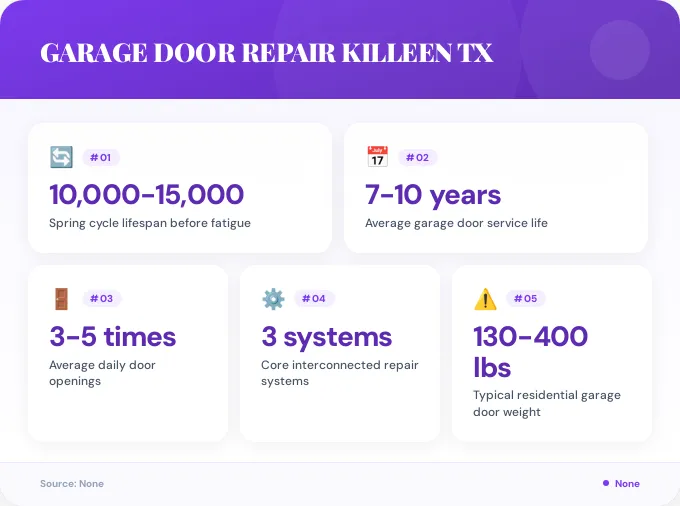
If you’ve ever wondered why a garage door that weighs 130 to 400 pounds can be lifted with one hand, the answer is physics, not magic. A correctly tensioned spring system does nearly all the lifting work, the opener just provides a nudge. When homeowners search for garage door repair Killeen TX, they’re usually reacting to a sudden, loud failure: a bang, a door that won’t budge, or a cable dangling uselessly off a drum. Understanding what’s actually happening inside that mechanism changes how you respond to it.
This guide breaks down the three core systems, springs, cables, and openers, so you know exactly what’s failing, why it matters, and why professional repair isn’t a luxury but a safety requirement.
How Does a Garage Door System Actually Work?
A residential garage door operates as a counterbalance system. Springs store mechanical energy that offsets the door’s weight, while a track-and-roller assembly guides the panel up and down in a curved path. The opener motor doesn’t lift the door so much as trigger and guide the movement the springs make possible.
Every component depends on the next. If a spring loses tension, the opener has to work harder, which strains the motor gear and the drive mechanism. If a cable frays, the door can hang unevenly, which stresses the tracks and rollers. This is why a single worn part rarely stays isolated for long, and it’s also why a comprehensive inspection matters more than a quick parts swap.
What Do Springs Do, and Why Do They Fail?
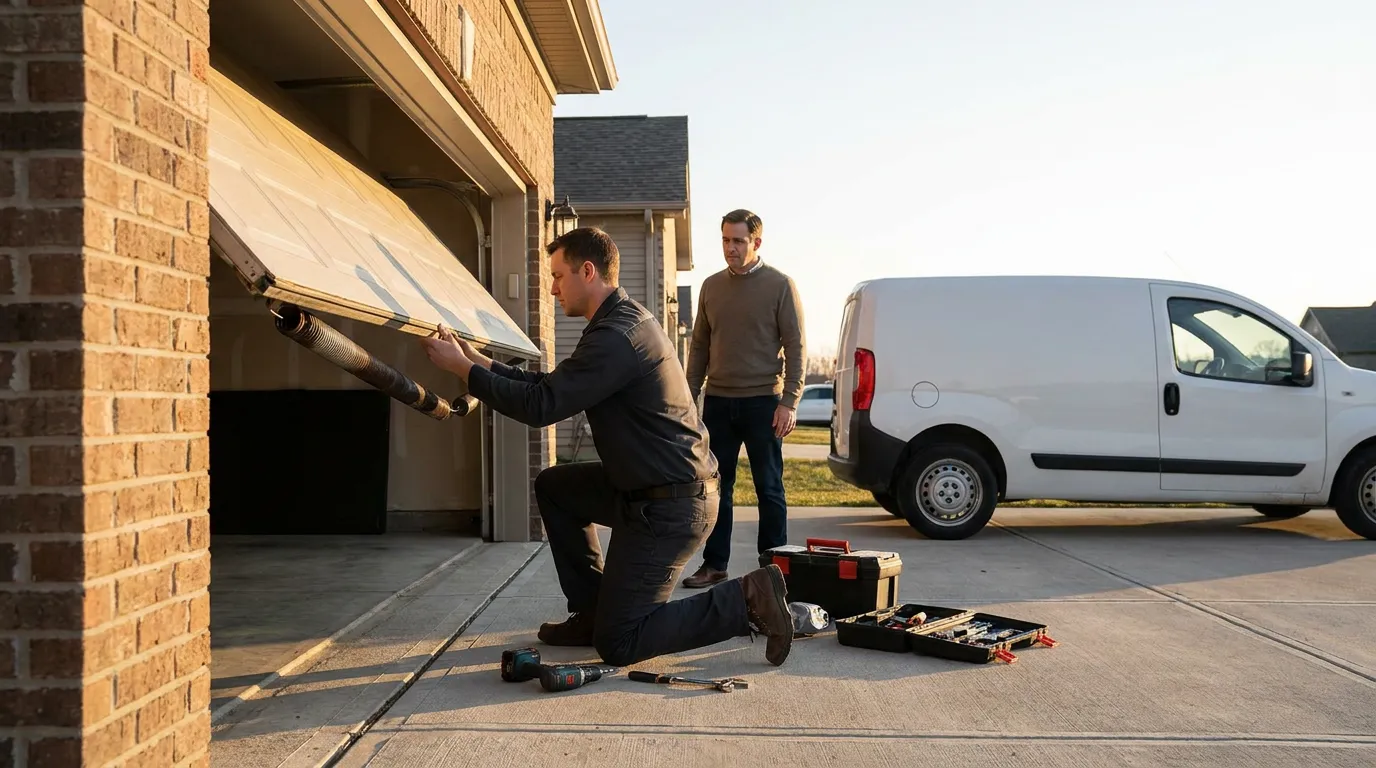
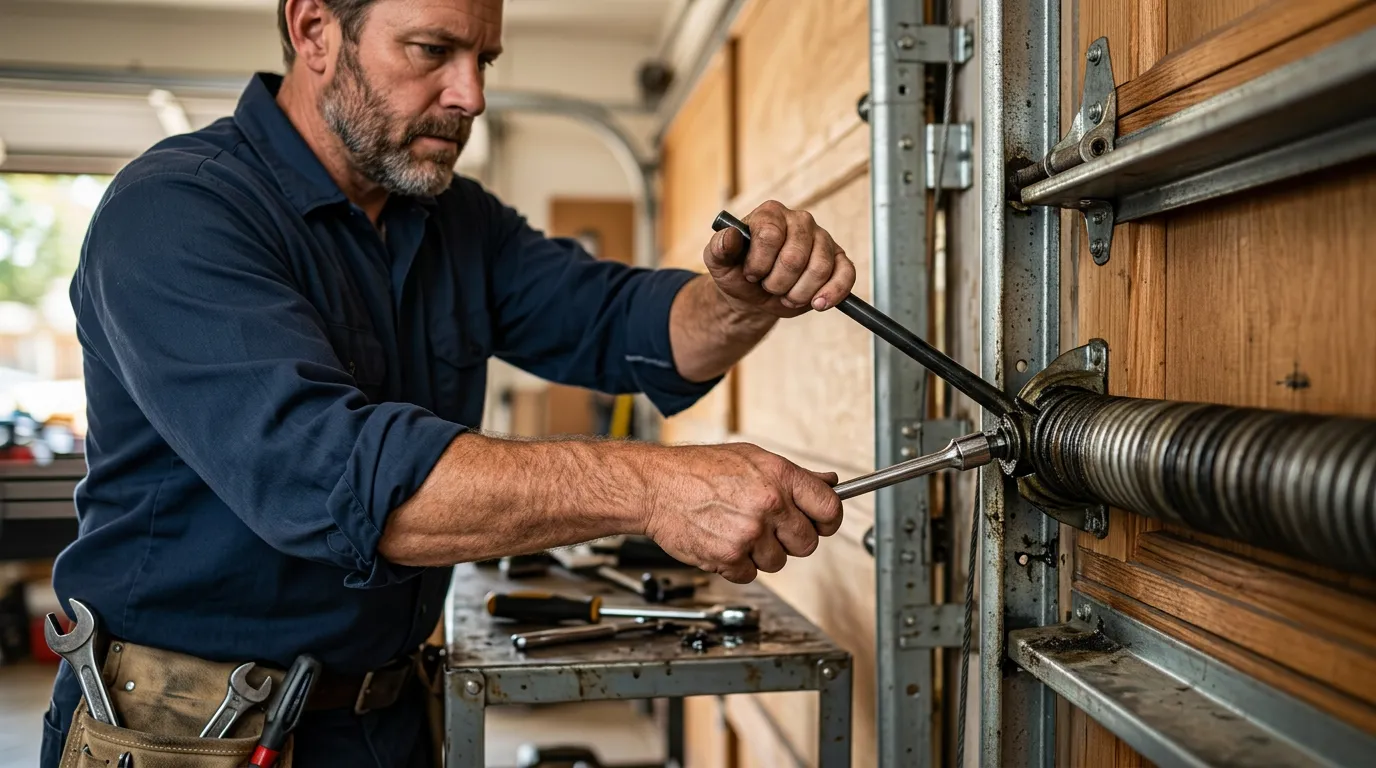
There are two spring types used in residential doors: torsion springs, mounted on a bar above the door, and extension springs, mounted along the upper tracks. Torsion springs twist to store energy; extension springs stretch. Both are engineered for a specific cycle count, typically 10,000 to 15,000 cycles, with one cycle being a single open-and-close.
For an average household opening the door 3 to 5 times a day, that translates to roughly 7 to 10 years of service life before metal fatigue sets in. Heat, humidity swings, and inconsistent maintenance can shorten that window. When a spring snaps, it’s usually sudden and loud, and the door becomes either too heavy to lift manually or impossible to move at all.
Spring replacement requires matching wire diameter, coil length, and winding direction to the door’s exact weight. Get it wrong and the door will slam down or refuse to stay open, which is why emergency spring repair is one of the most requested services in the Killeen area.
Why Are Cables So Dangerous When They Break?
Cables connect the bottom brackets of the door to the spring system via drums mounted on the torsion bar. They carry the tension transferred from the springs and keep the door tracking evenly on both sides. A cable operating under full load holds significant stored force, similar to a tensioned wire under constant strain.
When a cable frays or snaps, the door typically drops unevenly, torquing the panel and sometimes knocking it off the track entirely. This is one of the more common after-hours calls technicians receive, because a cable failure often happens mid-cycle, trapping a vehicle inside or leaving the opening exposed overnight.
- Frayed strands near the drum usually signal imminent failure within days, not months.
- Uneven door movement, where one side rises faster than the other, points to a cable or drum issue.
- Visible slack in a cable while the door is closed means it has already come off the drum.
Because cables and springs share the same load path, a problem in one almost always has to be checked against the other. That’s part of why same-day, around-the-clock response matters, as outlined in INO’s 24/7 emergency garage door repair coverage for Killeen homeowners.
How Do Garage Door Openers Fit Into the System?
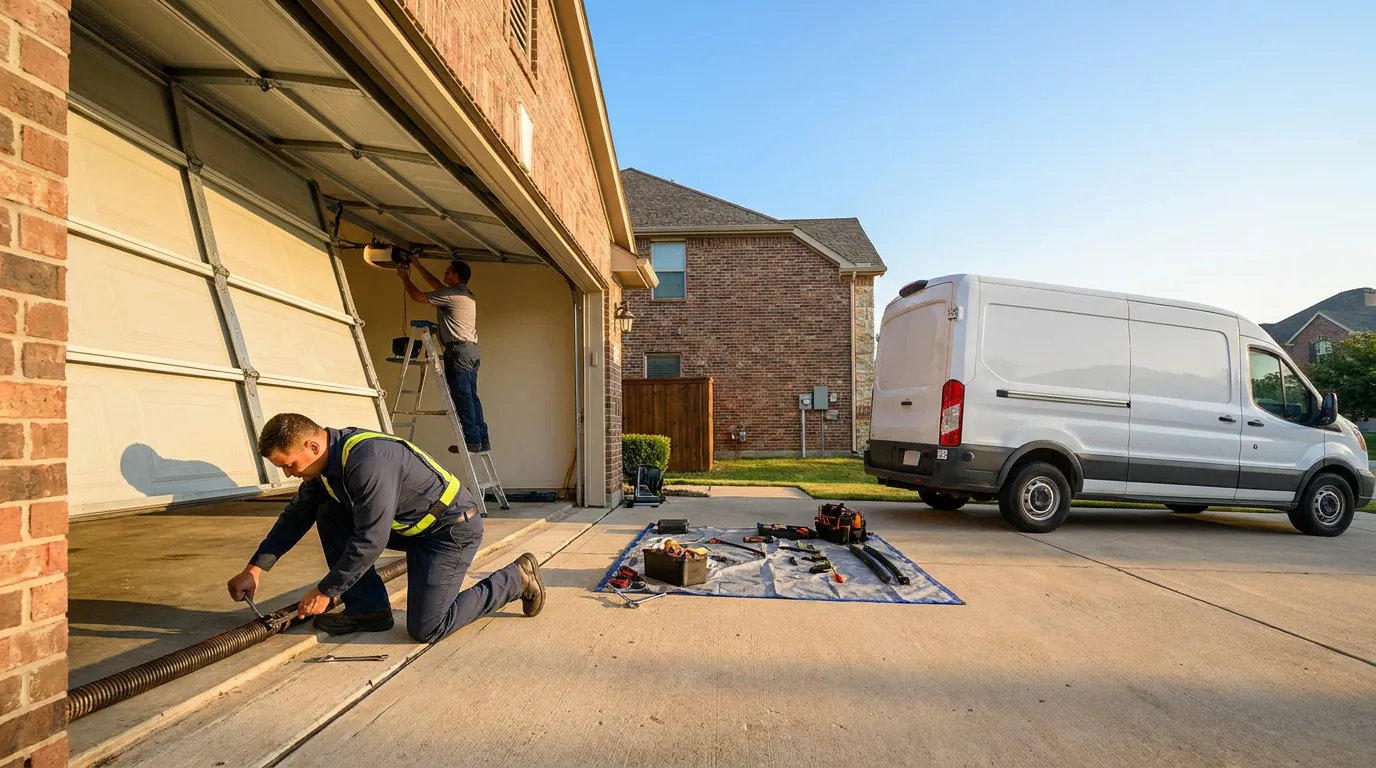
The opener is the automation layer, not the muscle. A chain, belt, or screw-drive mechanism pulls a trolley along a rail, which pushes or pulls the door through the arm connection. Modern openers also manage safety features: photo-eye sensors near the floor, auto-reverse logic, and in many newer units, battery backup and smartphone connectivity.
Opener problems are frequently misdiagnosed as spring issues because the symptoms overlap, a door that won’t open fully, or one that reverses unexpectedly. In reality, roughly a third of all service calls that start as “my door won’t open” trace back to the opener’s circuit board, sensor alignment, or worn drive gear rather than the spring system itself.
| Symptom | Likely Cause | System Involved |
|---|---|---|
| Door won’t budge, feels extremely heavy | Broken or weakened spring | Spring system |
| Door hangs crooked or off track | Frayed or snapped cable | Cable and drum |
| Door reverses before closing | Misaligned sensors or worn gear | Opener |
If the opener itself is the culprit, it’s worth having a technician evaluate both the unit and the drive system together, which is exactly the scope covered in garage door opener repair in Killeen, TX.
What Are the Warning Signs Something Is Breaking?
Garage door systems rarely fail without warning. Most homeowners can catch a developing problem weeks before full failure if they know what to listen and look for.
- Loud popping or banging during operation, often the first sign of spring fatigue.
- Visible gaps or rust in spring coils, especially after humid stretches.
- Jerky, uneven movement instead of smooth travel along the track.
- Opener motor straining, running longer or louder than usual to complete a cycle.
- Door drifting down on its own after being left partially open.
Any one of these on its own warrants a service call. Multiple symptoms together usually mean the system is close to a complete failure, and waiting increases both the repair scope and the risk of the door falling unexpectedly.
Why Isn’t DIY Repair a Safe Option?
Torsion springs are wound under hundreds of pounds of force. Releasing or adjusting that tension requires specialized winding bars, precise technique, and an understanding of how much force a specific spring size holds. General contractors and most handy homeowners simply don’t have the training or tools to do this safely.
Cable work carries similar risk since the drums and cables are tensioned in tandem with the springs. A mistake during a DIY repair attempt can result in the door crashing down, a cable whipping loose, or a spring releasing suddenly, any of which can cause serious injury.
Beyond safety, there’s a reliability issue. A mismatched spring or an improperly seated cable may work for a few cycles before failing again, often at a worse moment. Knowing how to choose the right garage door repair service in Killeen matters because the quality of the diagnosis determines whether the fix actually lasts.
What Makes Killeen’s Climate a Factor in Repairs?
Central Texas summers push temperatures well above 100°F, and that heat causes metal components to expand, lubricants to thin out, and rubber seals to dry and crack faster than in milder climates. Combined with humidity swings between seasons, this accelerates corrosion on springs and cables that aren’t properly maintained.
Garage doors facing direct afternoon sun in Killeen neighborhoods also see more wear on opener motors, since the unit works harder when heat adds resistance to moving parts. Routine lubrication and tension checks matter more here than in cooler, drier regions, and they’re part of why seasonal inspection requests spike heading into and out of summer.
Key Takeaways
- Springs do the heavy lifting; openers only automate the motion the springs make possible.
- Most springs last 7 to 10 years or 10,000 to 15,000 cycles before fatigue sets in.
- Frayed or slack cables often signal a failure that could happen within days.
- Roughly a third of “door won’t open” calls are actually opener issues, not spring problems.
- DIY spring or cable repair carries serious injury risk due to stored tension.
- Killeen’s heat and humidity swings accelerate wear on springs, cables, and opener motors.
- Pricing for repairs varies based on spring size, cable length, opener model, and the extent of damage, a technician can provide an accurate custom quote after inspection.
People Also Ask
How much force does a garage door spring actually hold?
A standard torsion spring can hold several hundred pounds of tension depending on door weight and size. This is why professional winding tools and training are required, not casual hand tools.
Can a garage door be opened manually if the spring breaks?
Technically yes, but it will be extremely heavy and difficult to control safely, risking injury or further damage to the track system. It’s best to leave the door closed and call for repair.
Why does my opener run but the door doesn’t move?
This usually indicates a broken spring, a disconnected trolley arm, or a stripped drive gear inside the opener. The motor can run independently of the door’s actual movement, so this is a common diagnostic confusion point.
How often should garage door cables be inspected?
An annual visual inspection is recommended, with more frequent checks if the door sees heavy daily use. Technicians typically inspect cables during any spring service since the two systems work together.
Is it cheaper to repair or replace a garage door opener?
It depends on the opener’s age, the specific part that failed, and whether safety features meet current standards. A technician can assess the unit and provide options so you can compare repair versus replacement with a custom quote.
Frequently Asked Questions
What’s the difference between torsion and extension springs?+
Torsion springs mount horizontally above the door and twist to store energy, offering smoother, more controlled lifting. Extension springs run along the horizontal tracks and stretch under load, which is common in older or lighter door setups.
How do I know if I need emergency garage door repair?+
If the door won’t close and your home or vehicle is exposed, if a spring has snapped audibly, or if the door is stuck halfway, these qualify as emergencies. Same-day and after-hours response is available for these situations through affordable emergency repair services in Killeen.
What does it cost to repair a garage door spring or cable?+
Pricing varies based on spring type, door size, cable length, and labor complexity. The most reliable way to get an accurate figure is a free written quote after an on-site inspection.
Can I replace just one spring if I have two?+
Most technicians recommend replacing both springs together even if only one broke, since the second is likely close to the same fatigue point. Mismatched spring ages often lead to another failure within months.
How long does a typical garage door repair take?+
Spring or cable replacement typically takes under two hours once a technician is on-site, while opener diagnostics and repair can vary depending on the issue. Emergency calls are prioritized for same-day service where possible.
Should I repair my old door or install a new one?+
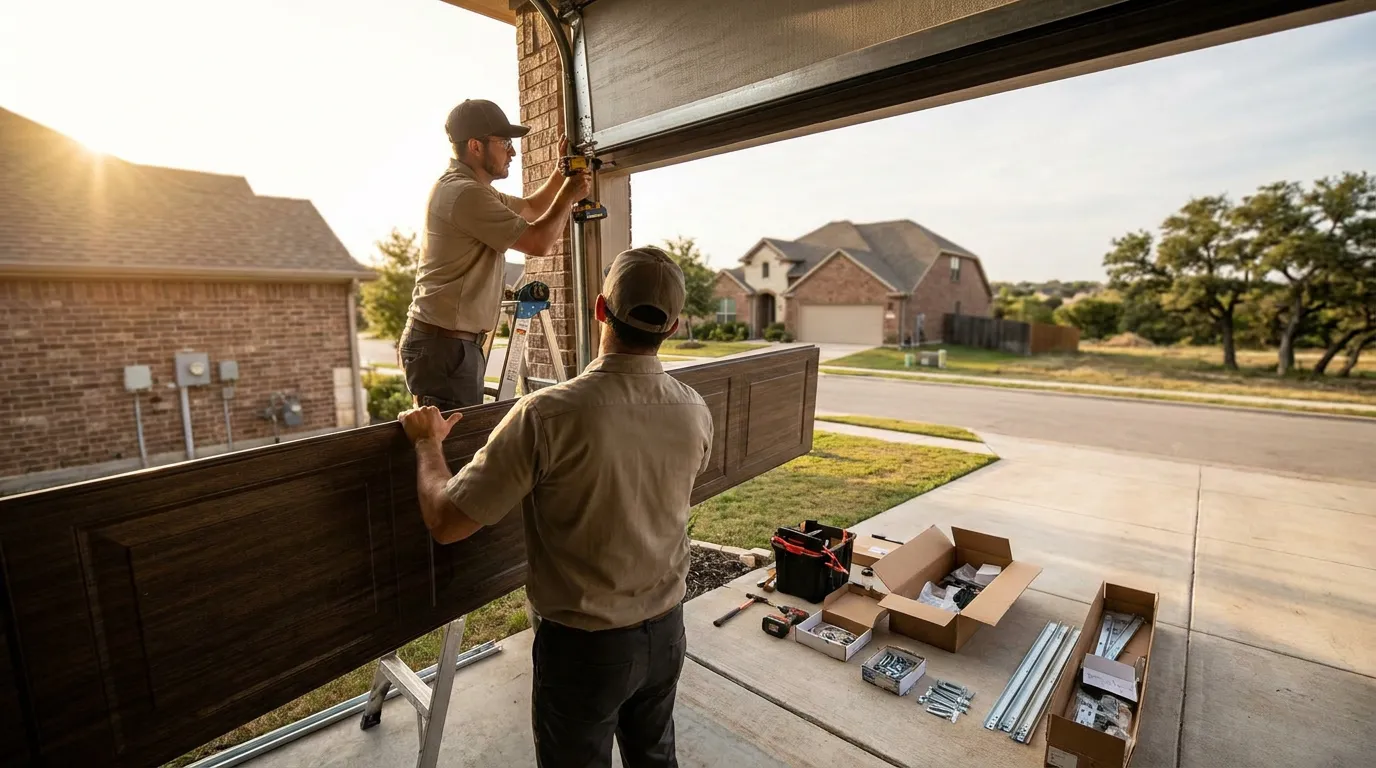
If the door frequently comes off track, the opener is outdated, or repairs are becoming frequent, replacement may offer better long-term value. A side-by-side evaluation during garage door installation consultation in Killeen can clarify which option fits your situation.
Garage door systems look simple from the driveway, but the springs, cables, and openers working together form a precisely engineered machine under constant tension. When any one part wears down, the whole system is affected, and that’s exactly why professional diagnosis and repair protect both your home and your safety. If your door is making noise, moving unevenly, or has stopped working altogether, reach out to INO Garage Doors or visit the contact page to schedule an inspection and get a clear, honest quote for the repair your system actually needs.