Quick Answer
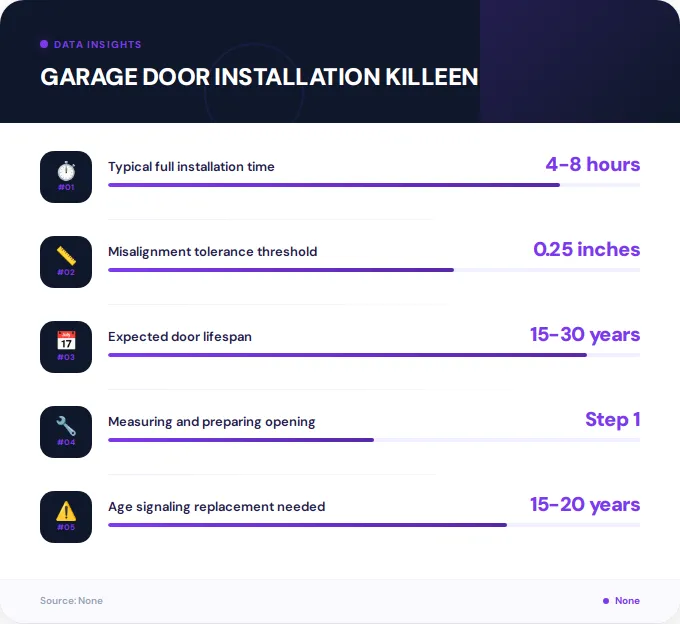
A full garage door installation in Killeen typically takes between four and eight hours and involves measuring the opening, selecting the door and track system, removing the old door, installing new tracks and hardware, mounting the new door and opener, then testing balance, safety sensors, and auto-reverse function. Pricing depends on door size, material, insulation level, and opener type, so a technician should confirm the exact price before any work starts.
Why Does Garage Door Installation Take Longer Than People Expect?
Most homeowners picture garage door installation in Killeen as a quick swap: pull the old door off, hang a new one, done. In reality, a proper installation involves a dozen smaller steps, each one affecting how safely and smoothly the door operates for the next 15 to 30 years.
A garage door is the largest moving object in most homes, and it is balanced by springs holding hundreds of pounds of tension. Rushing the install, skipping track alignment, or misjudging headroom clearance can lead to early wear, noisy operation, or a door that falls out of balance within months.
That is why a careful installer treats this as a structural project, not a cosmetic swap. The goal is a door that opens and closes thousands of times a year without strain on the opener, the tracks, or the springs.
When Does a Garage Door Need Full Replacement Instead of Repair?
Not every garage door problem calls for a full replacement. But certain signs point toward installing a new system rather than patching the old one.
- Visible panel damage from impact, rust, or warping that affects more than one section.
- Frequent off-track issues even after repeated adjustments, often a sign the door and tracks were mismatched from the start.
- Door is 15 to 20+ years old and lacks modern safety features like auto-reverse sensors.
- Poor insulation causing noticeable temperature swings in an attached garage during Central Texas summers.
- Opener strain, where the motor works harder than it should because the door itself is out of balance or too heavy for the current hardware.
If you’re weighing repair versus replacement, this breakdown of how springs, cables, and openers actually work can help you understand what’s fixable and what typically signals it’s time for a new door.
How Do Technicians Measure and Prepare the Opening?
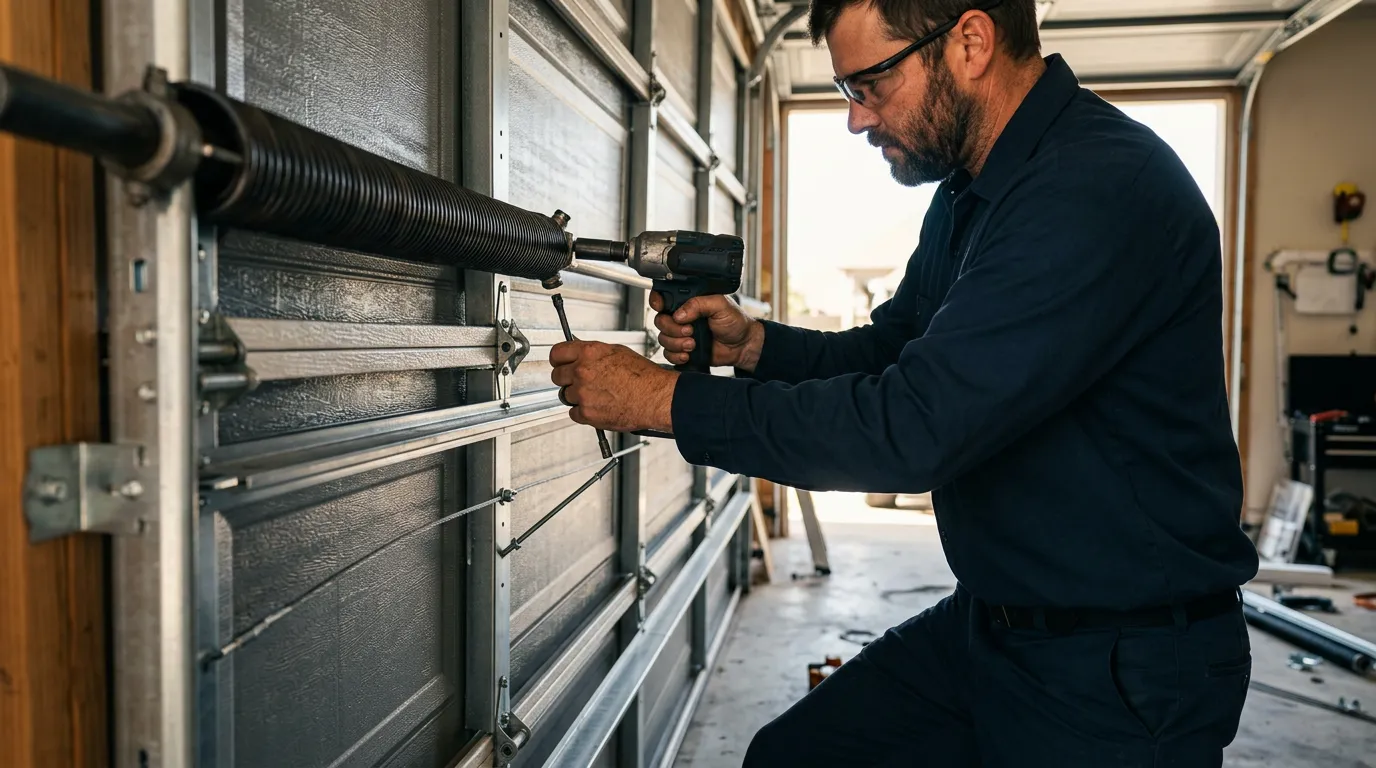
Every installation starts with measurements, and this step is more involved than it looks. Technicians measure the width and height of the rough opening, but they also check headroom (the space above the opening needed for the track and springs), backroom (depth needed for the door to fully open), and sideroom (space on each side for the vertical tracks).
In older Killeen homes, especially those built before current framing standards, openings are not always perfectly square. A technician checks for this using a level and diagonal measurements, since even a half-inch of misalignment can cause binding once the door is installed.
This prep stage also includes inspecting the surrounding frame, the condition of the slab or foundation at the threshold, and whether the existing wiring supports the opener being installed. Skipping this step is one of the most common reasons DIY installs fail early.
What Materials and Door Types Are Best for Killeen Weather?
Killeen sees hot, humid summers and occasional hard freezes in winter, which makes material choice more than a style decision. Steel doors remain the most common choice because they resist warping and hold up well against wind-driven debris. Insulated steel (with polyurethane or polystyrene foam cores) performs noticeably better for attached garages used as workshops or extra living space.
Wood and faux-wood composite doors are popular for curb appeal on newer builds, but they require more maintenance in humid conditions. Aluminum and glass combinations are trending for modern homes but are typically less insulated.
If you’re exploring styles, current trends in garage door installation cover which finishes and window configurations are showing up most in newer Killeen neighborhoods.
What Happens During the Actual Installation?
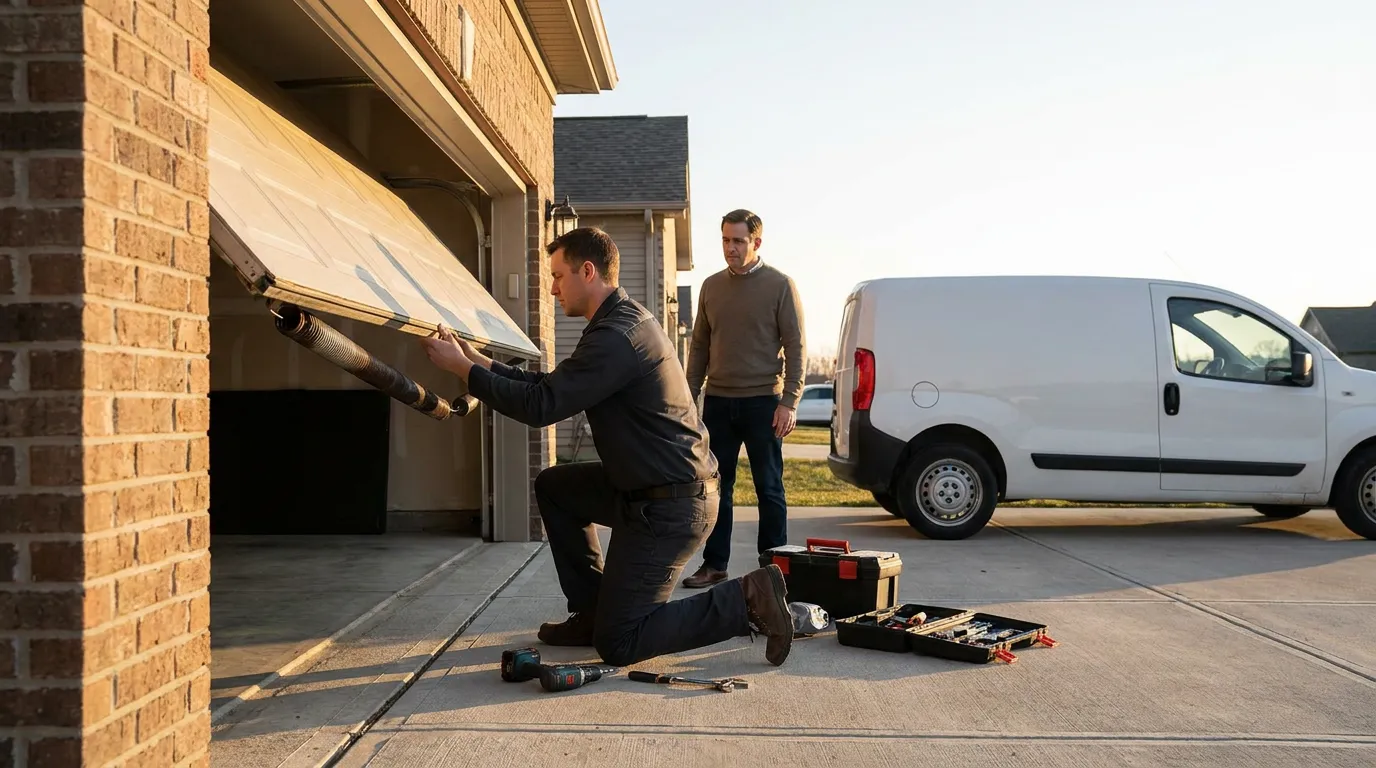
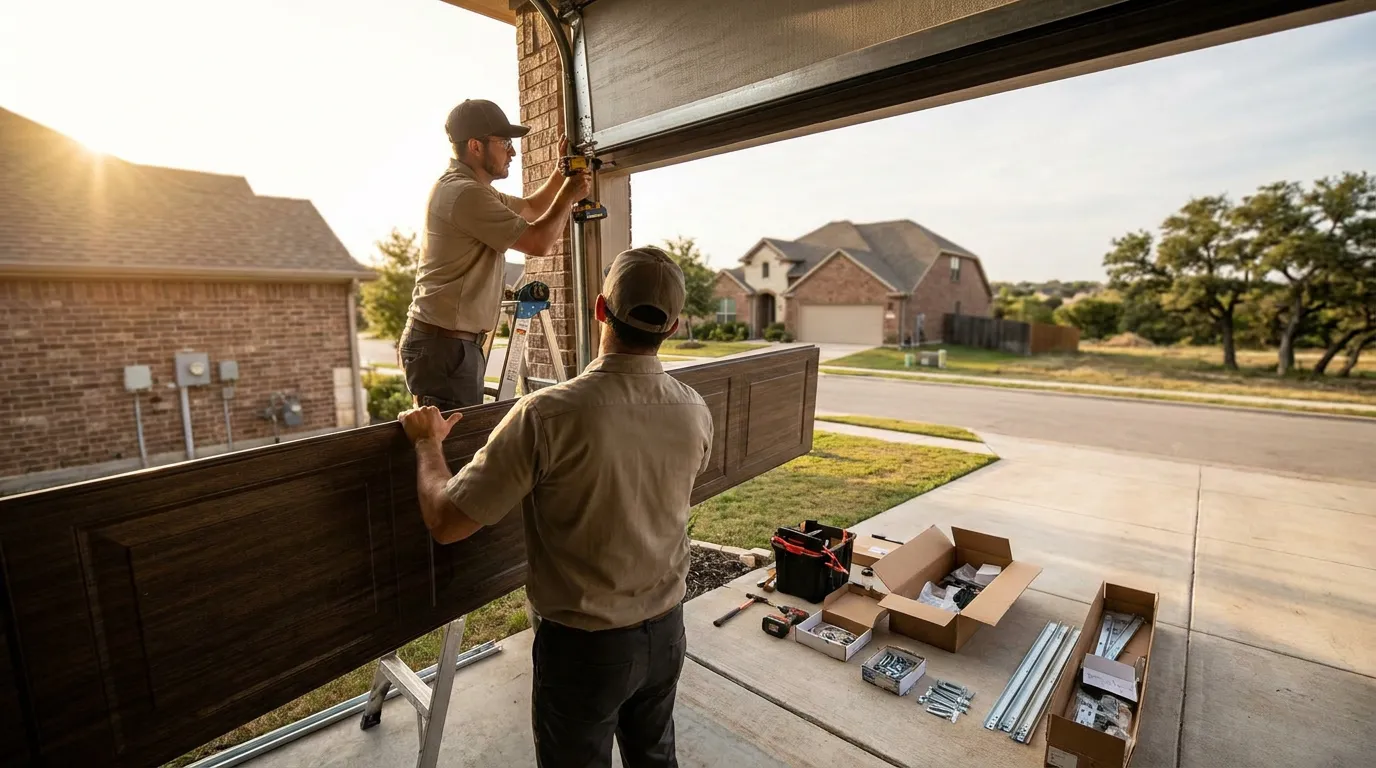
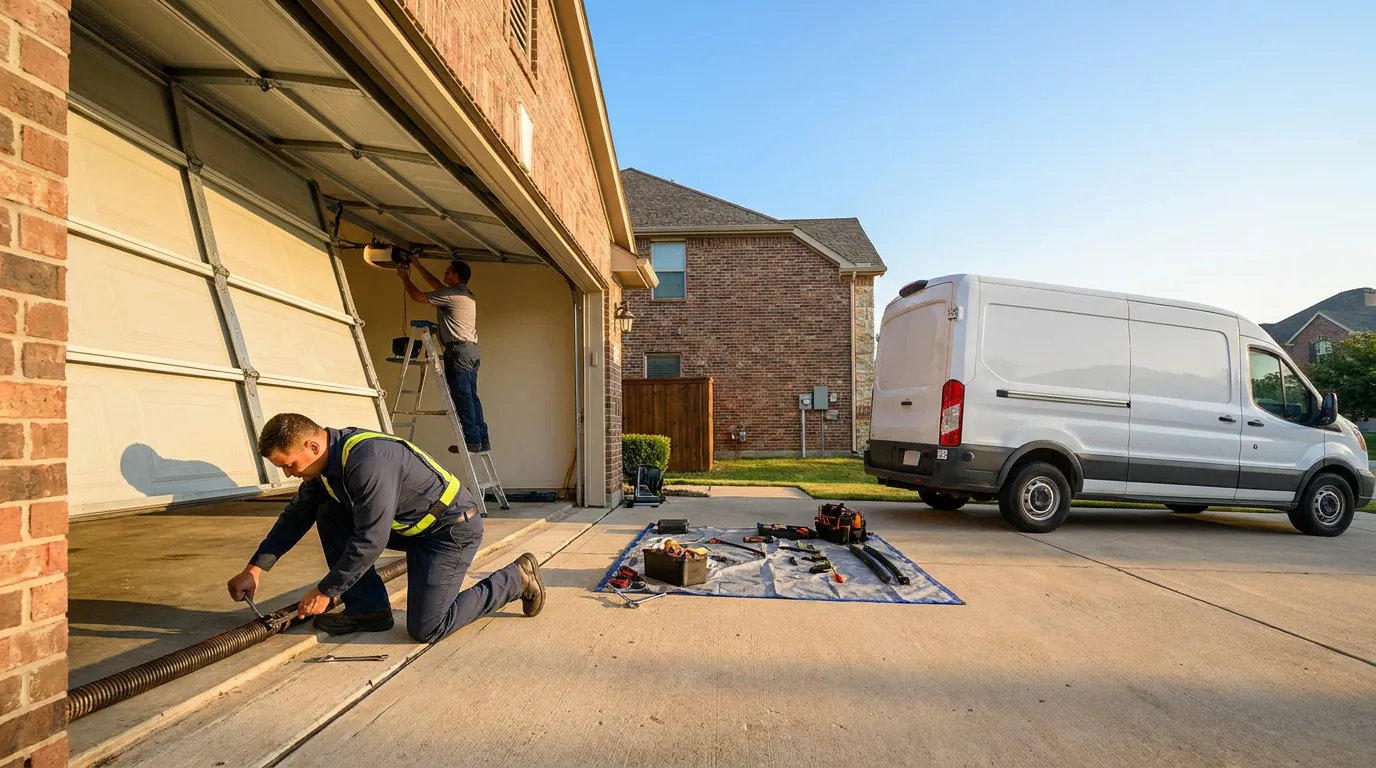
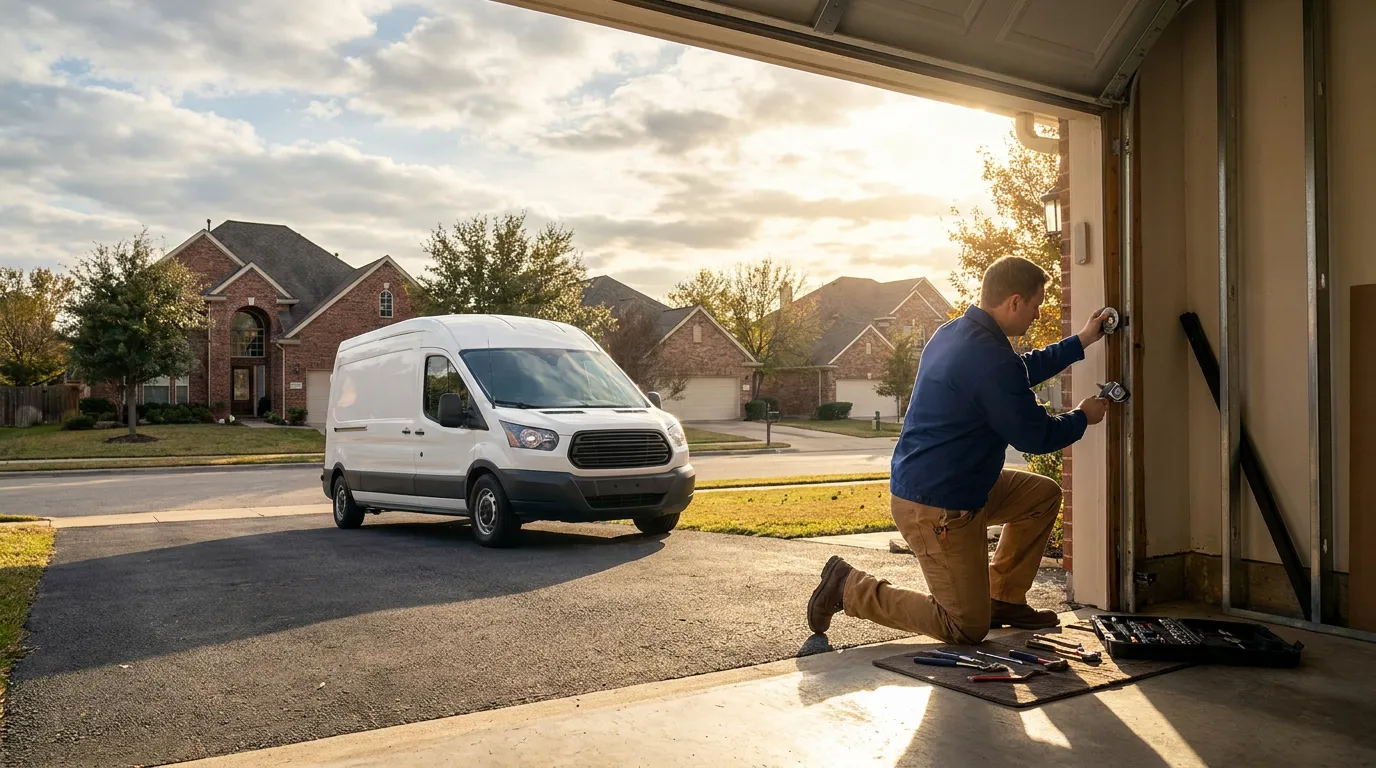
Once materials arrive and the opening is confirmed ready, the actual installation follows a sequence that experienced crews rarely skip:
- Remove the old door and hardware, including tracks, springs, and cables, disposing of materials safely.
- Install new vertical and horizontal tracks, checking plumb and level at every bracket.
- Mount the new door panels section by section, attaching hinges and rollers as each panel is set.
- Install the torsion or extension spring system, calibrated to the door’s exact weight.
- Attach the opener, wire the wall control and safety sensors, and secure the rail to the header.
- Weatherstrip and seal the bottom and sides to block drafts, pests, and water intrusion.
- Test and fine-tune balance, force settings, and automatic reverse function.
Depending on door size, whether the opener is new or reused, and whether structural framing adjustments are needed, this process generally takes between four and eight hours. Custom doors, double-wide openings, or homes needing header reinforcement can take longer.
For homeowners who want a full narrative of this process specific to local homes, see this detailed walkthrough of garage door installation in Killeen.
How Is the New Door Tested Before the Crew Leaves?
A door is not finished until it passes several functional checks. Technicians verify that the door is balanced, meaning it stays in place when manually opened halfway and released, a sign the springs are correctly tensioned.
Next comes auto-reverse testing: placing an object in the door’s path to confirm it stops and reverses rather than continuing to close. Photo-eye sensors near the floor are tested for alignment, since even slight misalignment can cause the door to refuse to close.
Finally, the crew checks the opener’s force settings, remote and keypad programming, and listens for unusual noise from rollers or the drive system. If anything sounds off, adjustments are made before the job is considered complete.
What Factors Affect Garage Door Installation Pricing?
Garage door installation pricing depends on several factors rather than a flat number. Door size and style (single vs. double, standard vs. custom), material (steel, wood, aluminum, composite), insulation level, and whether a new opener is included all play a role.
Labor complexity matters too. An opening that needs header reinforcement, rewiring, or track reconfiguration takes longer than a straightforward swap. Urgency can factor in as well, since same-week scheduling differs from standard booking.
Because every home and every door package is different, pricing varies based on your specific project. A technician will inspect the opening and confirm the exact price before any work starts, so you know the full scope before committing. You can also review this installation and maintenance overview for a sense of what’s typically included in a full-service job.
Garage Door Material Comparison
| Material | Durability | Best For |
|---|---|---|
| Insulated Steel | High, resists warping and dents | Attached garages, temperature control |
| Non-Insulated Steel | Moderate to high | Detached garages, budget-conscious upgrades |
| Wood / Composite | Moderate, needs upkeep | Curb appeal, custom architectural homes |
| Aluminum / Glass | Moderate, lightweight | Modern design, natural light |
Key Takeaways
- A full garage door installation generally takes four to eight hours depending on door size, opener needs, and framing condition.
- Accurate measuring, including headroom and backroom clearance, prevents long-term wear and misalignment issues.
- Insulated steel doors tend to perform best for Killeen’s hot summers and occasional winter freezes.
- Final testing should always include balance checks, auto-reverse safety testing, and photo-eye sensor alignment.
- Pricing depends on size, material, insulation, and labor complexity, so a technician should confirm costs before work begins.
- Replacing rather than repairing makes sense once a door shows repeated off-track issues, major panel damage, or lacks modern safety features.
- Working with experienced installers reduces the risk of spring-related injuries, since torsion springs carry significant stored tension.
People Also Ask
How long does garage door installation take?
Most standard installations take between four and eight hours, depending on door size, whether the opener is new, and whether the opening needs structural adjustments. Double-wide or custom doors can take longer.
Can I install a garage door myself?
Technically yes, but it’s risky without experience, since torsion springs carry high tension and improper installation can cause injury or early equipment failure. Most homeowners hire a professional for safety and warranty reasons.
Do I need a new opener when I install a new door?
Not always. If your current opener is in good condition and compatible with the new door’s weight and track system, it can often be reused, though older openers may need upgrading for safety compliance.
What size garage door do I need?
Standard single doors are typically 8 to 9 feet wide, while double doors run 16 feet wide, but exact sizing depends on your existing opening and vehicle needs. A technician measures the opening precisely before ordering materials.
Frequently Asked Questions
How much does garage door installation cost in Killeen?+
Cost depends on door size, material, insulation, and whether a new opener is included. A technician will assess your specific opening and confirm the exact price before any work starts, since every project varies.
How often should a garage door be replaced?+
Most garage doors last 15 to 30 years depending on material, usage, and maintenance. Doors showing repeated repair issues, panel damage, or outdated safety features are good candidates for replacement sooner.
What’s included in a professional installation?+
A full install typically includes removing the old door and hardware, installing new tracks and springs, mounting the new door, connecting the opener, weatherstripping, and final balance and safety testing.
Why does my new door need to be tested before the crew leaves?+
Testing confirms the door is balanced, the auto-reverse safety feature works, and sensors are properly aligned. Skipping this step can leave a door that looks fine but fails or malfunctions within weeks.
Should I hire a professional or attempt a DIY install?+
Professional installation is strongly recommended because of the injury risk from high-tension springs and the precision needed for track alignment. Hiring a professional for garage door installation also typically preserves manufacturer warranties.
Does a new garage door need ongoing maintenance?+
Yes, routine lubrication, hardware tightening, and balance checks extend the life of a new door significantly. See this garage door maintenance service guide for a typical upkeep schedule.
A new garage door is a long-term investment in your home’s safety, curb appeal, and everyday convenience. Whether you’re replacing a damaged door or upgrading to improve insulation and style, working with an experienced local team makes the difference between a door that lasts decades and one that causes headaches within the first year. For a closer look at full-service options, visit expert installation services in Killeen, or explore how INO Garage Doors approaches every project from measurement to final test. Ready to get started? Contact our team for a free, no-pressure quote tailored to your home.